Bangs for a round face, and whether you should get them
On a round face, a fringe that opens at the centre, such as curtain bangs or a side-swept fringe, shows a strip of forehead and adds lines that run down the face. A blunt fringe at the brows covers the forehead and draws one straight line across it, so the visible face looks shorter. Which of those sits well on you depends less on the word "round" than on your hairline, natural part, texture and forehead height, and you can check all four before you cut.
Updated November 2, 2026
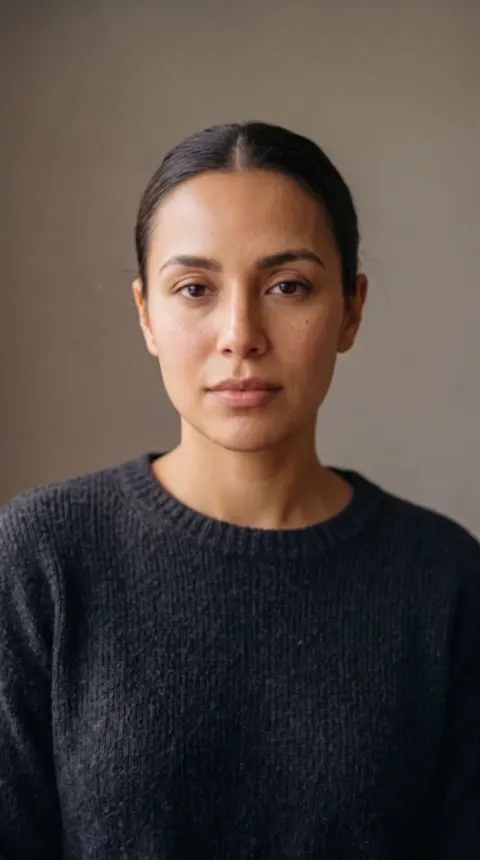
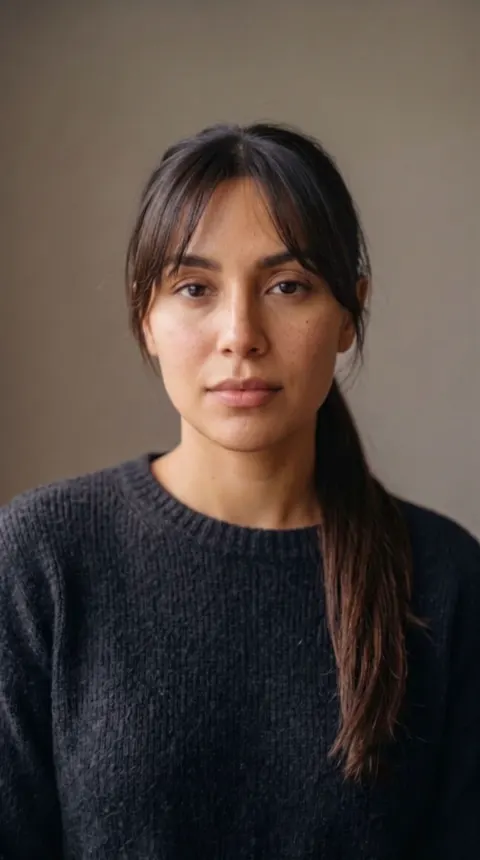
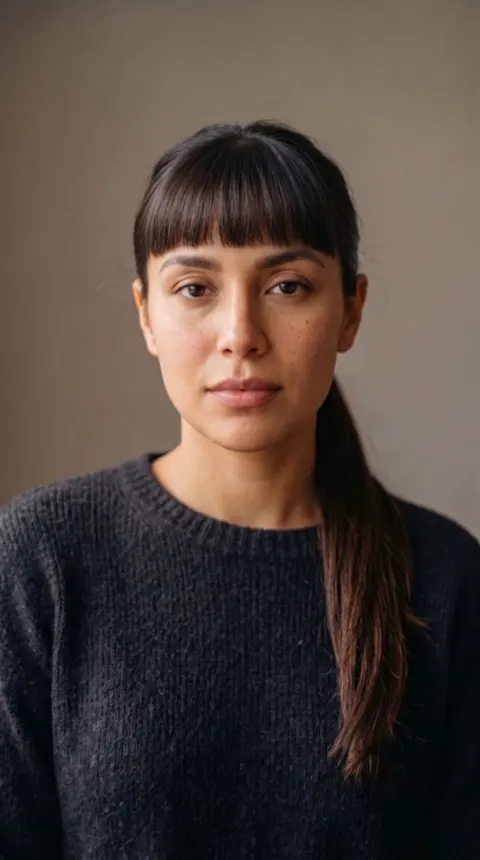
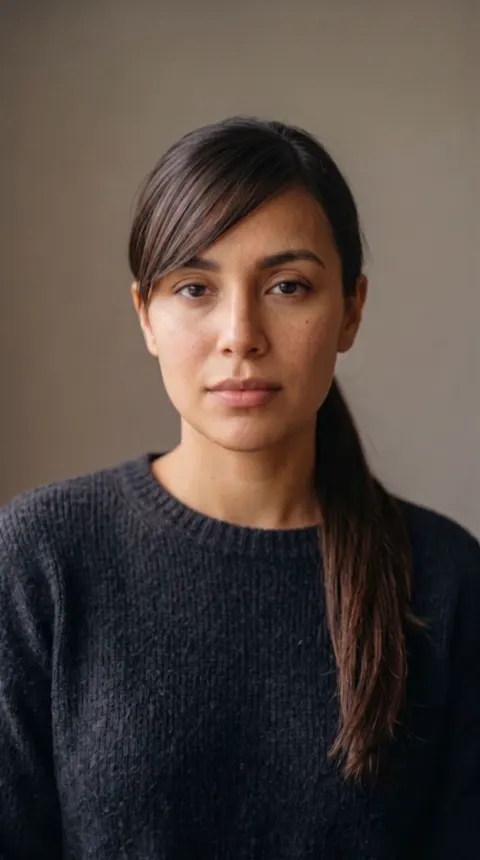
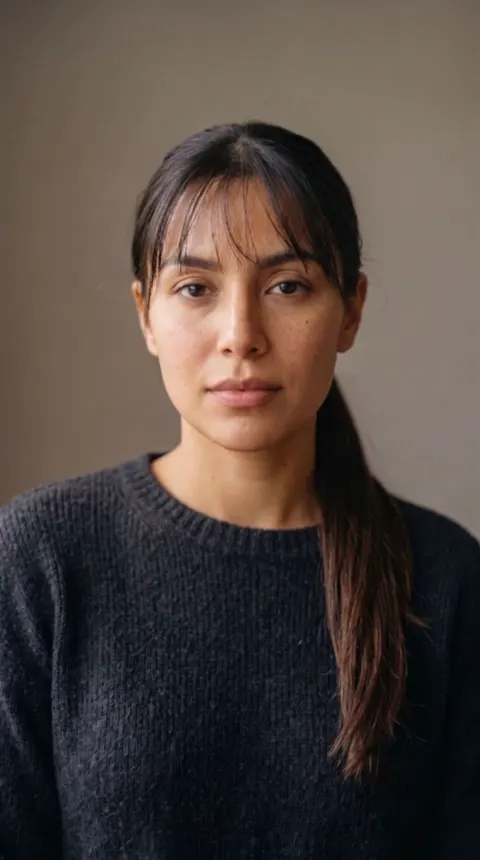
Illustrations of Tressaly looks on a model created for this page. Only the fringe changes; the face, the skin and the framing stay the same, so you can see what each fringe does on its own.
What does each fringe do to a round face?
| Fringe | What it shows and hides | Sits best with |
|---|---|---|
| Curtain | Shows a strip of forehead at the centre; the longest pieces frame the cheeks. Ending at or below the cheekbones covers part of their width, ending at the temples adds width there | A centre or near-centre part, hair with some movement |
| Blunt, at the brows | Covers the forehead with one straight line, so the visible face is shorter. The strongest change of the four | A clean front hairline with no centre cowlick, medium to dense hair, time for frequent trims |
| Side-swept | Crosses the forehead on a diagonal and leaves one side open, which breaks up a symmetrical outline | A strong natural side part |
| Wispy | Softens the hairline and lets the forehead show through | Fine hair, or a first fringe you want to be able to grow out quickly |
| None | The whole forehead and hairline show; the face reads at its full length | A hairline you like, or hair that will not hold a fringe in your climate |
Should you get bangs? Check these first
- Your part. If your hair falls to the same side every day without help, a fringe cut from that part stays put. A curtain or side-swept fringe follows it; forcing the other side means styling it every morning.
- A cowlick at the front. Hair that lifts or splits at the centre of the hairline fights a blunt fringe. A fringe that opens at the centre works with it.
- Forehead height. A short forehead leaves little room for a full fringe; a wispy or curtain fringe needs less. A tall forehead can carry any of them.
- Glasses. A fringe at the brows can rest on the frame. Ask for it to end just above, or choose one that moves away from the lenses.
- Humidity and time. A blunt fringe needs the most trims and the most attention on humid days. A longer fringe forgives both.
- Growing it out. Any fringe takes months to grow back. Curtain bangs grow into face-framing pieces most easily; a blunt fringe has the most awkward middle stage.
If most of these point one way, you have your fringe. If they point to none, keeping your hair as it is counts as a real answer, not a missed one.
Why do face-shape rules for bangs so often fail?
Round, oval, square, heart and oblong are shorthand. Two people with a "round" face can have a high forehead and a low one, a centre cowlick and a clean hairline, fine straight hair and dense curls. A rule such as "a long face needs curtain bangs" ignores all of that, which is why the same fringe looks settled on one person and fights the hair on another.
Professional consultation standards start the other way round: consultation and design planning on the person in front of you, then a cut. Tressaly's own styling rules follow the same order. A recommendation has to name the thing it saw, such as a part that sits left of centre, and may still conclude that the hair is better left as it is.
What should you look at instead of a label?
| What to observe | What it tells you | What tends to follow |
|---|---|---|
| Hairline and cowlicks | Where hair wants to fall and where it will lift or split | A cowlick at the centre fights a blunt fringe; a side-swept or parted fringe works with it |
| Natural part | Which side carries weight once the hair dries | A fringe parted on the natural side stays put; forcing the other side needs daily styling |
| Texture pattern | How much the hair shrinks and springs as it dries | Curly and coily hair needs more length cut in than the finished fringe shows |
| Density | How solid a fringe can look | Fine or sparse hair suits a wispy or longer fringe; dense hair can carry a full one |
| Forehead height against cheekbone width | Where a fringe will end and what it covers | A longer forehead gives room for a brow-length fringe; a short one suits a fringe that opens at the centre or none |
| Current length and condition | Whether the change is reversible | A fringe grows back in months; the rest of the cut does not need to change for it |
How to choose bangs for your face
- Photograph your hairlineHair pulled back, facing a window, no filter. Note cowlicks, the line of the hairline and which side your hair parts on its own.
- Describe your hair before you change itLength, texture pattern, density and how it dries. A fringe is cut into this hair, not into the hair in the reference photo.
- Decide length, part and fringe separatelyA fringe does not have to come with layers or a new length. Pick each component only if you can say what it does for you.
- Match the fringe to your forehead and cheekbonesA fringe that ends at the brows covers vertical length. A fringe parted and swept to each side adds width at the temples. A short blunt fringe shows the forehead and the brow line.
- Check the upkeepA blunt fringe needs trims more often than any other part of a cut and daily attention in humid weather. A longer, parted fringe forgives both.
- Preview before you cutTry the fringe on your own photo, or with a clip-in piece, and compare it against your current hair side by side. Keeping your hair as it is counts as a real result.
Which bangs work with curly or coily hair?
Judge the fringe on dry, styled hair, never stretched. Shrinkage means the cut length is longer than the length you will see, so a fringe planned on wet hair ends up shorter than you asked for. A curly fringe also sits as a shape rather than a line, so look at where its lower edge lands against the brows and cheekbones, not at a straight length. Professional guides on textured hair stress the same point: consultation and cutting in the natural pattern come before any rule about face shape.
Should you choose bangs that are trending?
Pinterest Predicts 2026 lists romantic gothic hairstyles under its Vamp Romantic direction, and searches like that move every season. A trend is a direction you choose on purpose, not a diagnosis of your face. If a trending fringe matches your hairline, part and texture, the trend is a bonus. If it does not, the trend will not make it sit.
Questions
Do bangs suit a round face?
They can, and the fringe you pick decides what changes. A fringe that opens at the centre, such as curtain bangs or a side-swept fringe, shows a strip of forehead and adds lines that run down the face. A blunt fringe at the brows covers the forehead and draws one straight line across it, so the visible face looks shorter. Your hairline, natural part, texture and forehead height decide which of those will sit well.
Do curtain bangs suit a round face?
Curtain bangs open at the centre and fall away to each side, so they show some forehead and frame the cheeks. Where the longest pieces end matters most: ending at or just below the cheekbones covers part of the cheeks' width, while ending at the temples adds width there. They also grow out more easily than a blunt fringe.
Should I get bangs if I wear glasses?
A fringe that ends at the brows can rest on the frame and get pushed out of place. Ask for it to end just above the frame, or choose curtain or side-swept bangs that move away from the lenses.
Should I get bangs if I have a big forehead?
A tall forehead gives a fringe room to fall, so a blunt or curtain fringe both sit easily. Covering the forehead is a choice, not a correction: leaving it open is just as valid.
How often does a fringe need a trim?
A blunt fringe grows into your eyes faster than any other part of a cut and needs the most frequent trims. A longer fringe that you part or sweep forgives a few more weeks.
How does Tressaly decide about bangs?
From one selfie it assesses visible length, texture pattern, density, condition, your current part, how volume sits and your facial proportions. It suggests a fringe only when it can say which of those supports it, and it otherwise recommends leaving the hair as it is. It never defaults to curtain bangs or face-framing layers.
Sources
- Skills England. Hair, wigs, make-up and prosthetics technician occupational standard, 2026.
- HABIA. National Occupational Standards for hair and beauty.
- Bectu Hair and Makeup Branch. Essential Skills for working with textured hair and darker skin tones.
- Pinterest Business. Pinterest Predicts 2026 trend report, 2026.
Guides describe styling choices, not medical or dermatological advice. Tressaly reads one selfie and shows these choices on your own photo. How a read works.